Gumbo
Probably no dish is more evocative of Louisiana in general, and New Orleans in particular, than gumbo. To the point that the dish is usually used as an allegory for the population makeup of the city. There are as many gumbo recipes as there are residents of Louisiana, but in essence the dish is a all-in-one-pot stew ladled over rice. The basis of said stew is a roux, file powder (dried, pounded sassafras leaves) and okra, all of which are thickeners that give gumbo its characteristic gooey-ness. Other ingredients vary by region; in New Orleans and coastal Louisiana seafood tends to dominate, while rabbit, sausage and other meats pop up in Cajun country.


Jambalaya
An all-in-the-pot sort of dish that consists of the holy trinity (onions, celery bell pepper) as a base, cooked with…well, anything, but usually ham, seafood and chicken. The entire mix is sauteed with rice, which absorbs all of the above flavors; the end result is amazingness.
Etoufee
Another Cajun dish that is a little unfairly associated with New Orleans, as opposed to its actual place of origin in Acadiana. A thick stew (so thick we hesitate to call it a stew) that uses shellfish as a main ingredient – most commonly crawfish. The saucy, rich stew is served over rice, to the point that it appears to smother it, which makes sense as the name of the dish comes from the French word ‘etouffer’ (to smother).
Po’boy
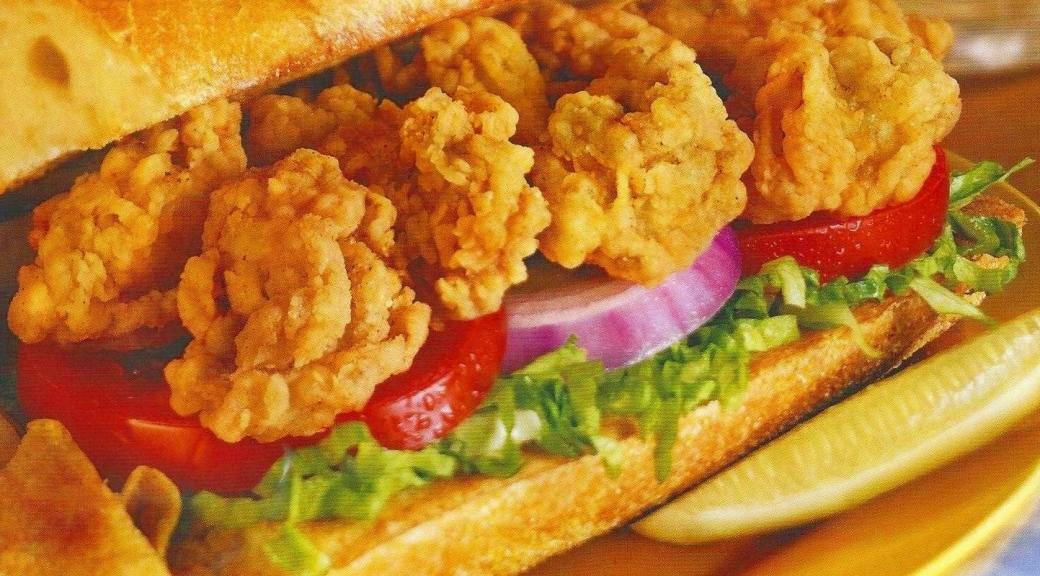
Most outsiders’ first question about the quintessential New Orleans sandwich (which can be found across much of the Gulf South) is: what’s the difference between, say, a po’boy, a sub, a hoagie or a grinder? There are a few schools of thought on this, but we believe the answer lays in the bread. Po’boys are made from French bread, but a particular kind of French bread: not quite as crispy as a baguette (which could hurt your mouth if you just bit into a loaf), but not so soft that it falls apart under the weight of often soupy ingredients (i.e. gravy). Leidenheimer’s is the most iconic New Orleans French bread bakery, but they’re definitely not the only game in town. Po’boy filling can be anything, but standards in this town include fried shrimp, fried oysters and roast beef – the last usually cooked in gravy until it is meltingly soft.
What’s in a name? There are many theories. Our favorite: back in 1929, streetcar workers in the city went on strike. Benny and Clovis Martin, former streetcar conductors turned restaurateurs, decided to show their old colleagues solidarity by serving them free sandwiches, which they named for the strikers: ‘poor boys,’ which in Yat has evolved into ‘po’boy.’
When you order a po’boy you’ll be asked if you want it dressed. Nothing to do with nudity; ‘dressed’ in this case means it comes with mayonnaise, tomatoes, lettuce, pickles and onions.