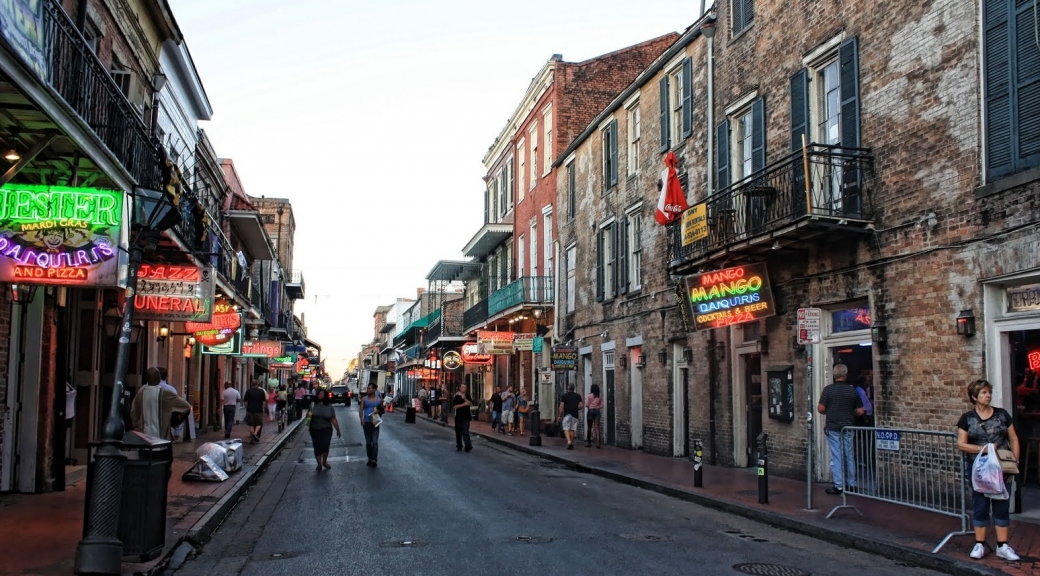
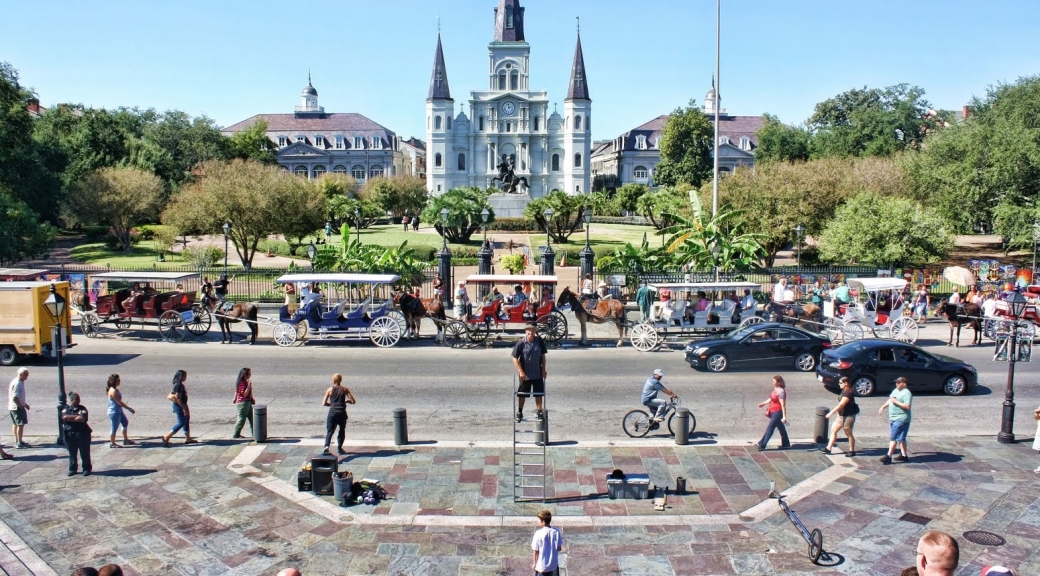
They don’t call it the Vieux Carre for nothing. The French Quarter was the original city of New Orleans, founded in 1718 by Jean-Baptiste Le Moyne de Bienville. Rampart Street is named as such because it once marked the actual city walls (or ramparts) of New Orleans. The city centered on the Place d’Armes, now known as Jackson Square, originally built as a military parade ground where criminals were hanged in public.
The name ‘French Quarter’ is a bit of a misnomer; New Orleans was under Spanish rule from 1762-1802, and it was during this period that two huge fires (1788 and 1794) seared away much of the original
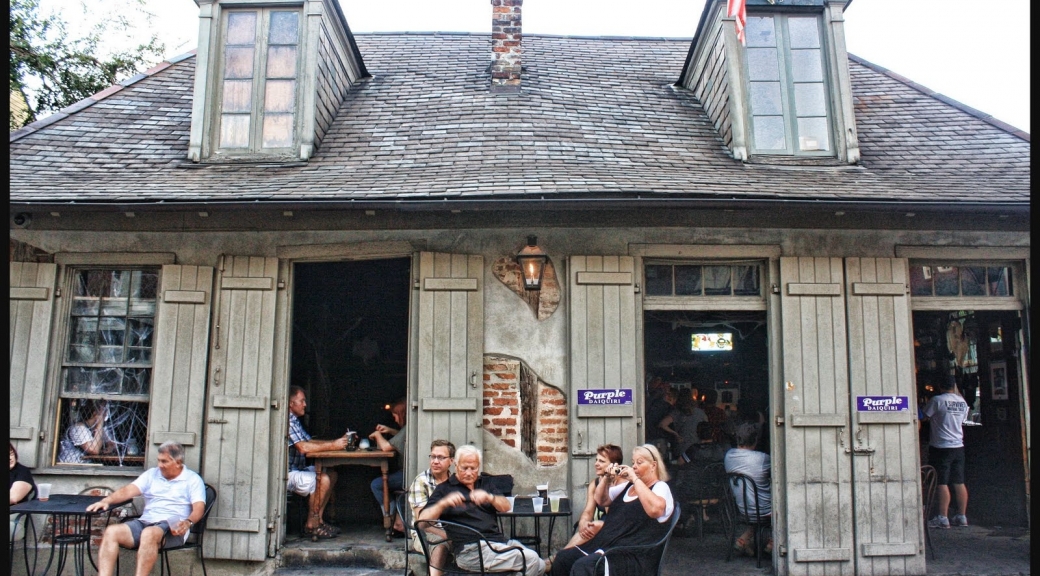
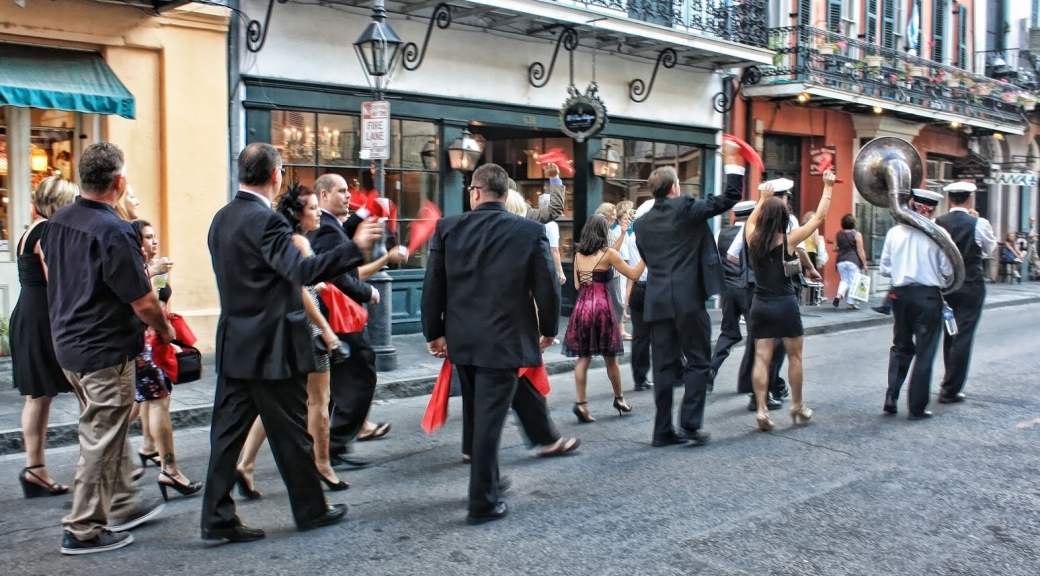
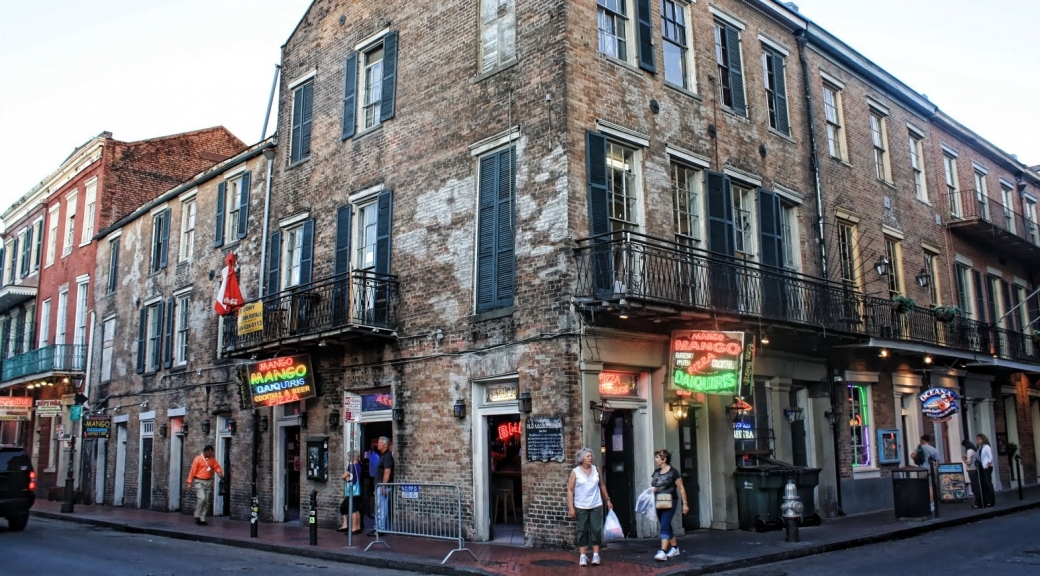
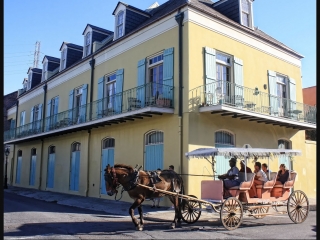
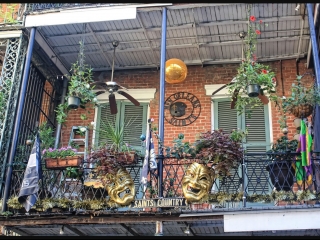
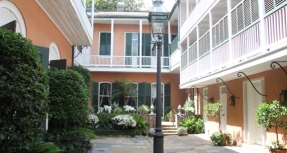
architectural façade of the Quarter. Thus, the buildings you see today retain more of a Spanish than French sensibility, as evidenced by wraparound balconies (which create a shady, breezy median space
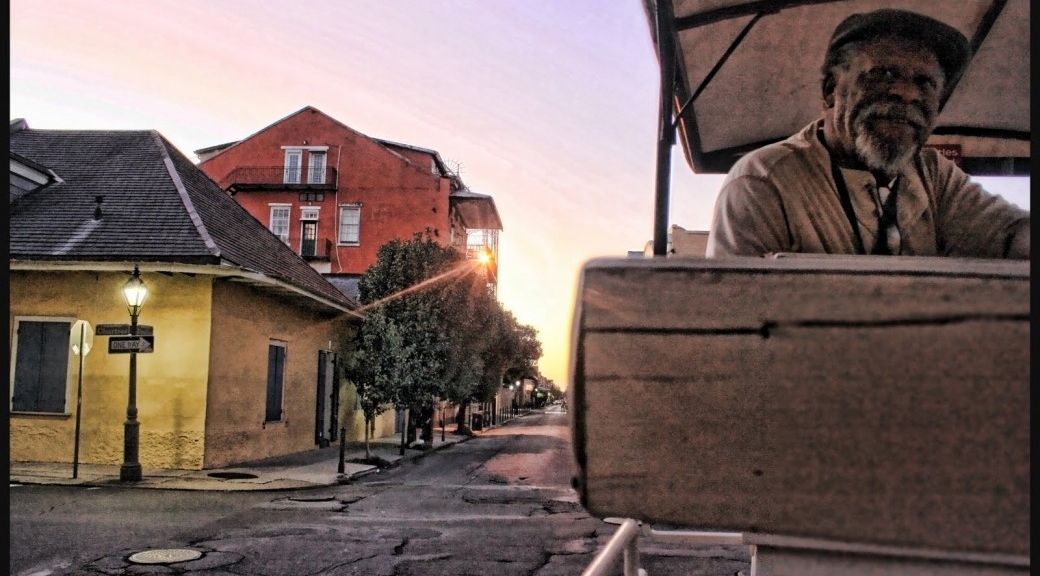
between the street and private residences — a useful architectural trick in hot, pre-AC New Orleans), lush courtyards that are partly inspired by the North African invaders who conquered Spain in the Medieval Age and bright colors, which form a reflective patina that wards off the sun.
The best example of actual French colonial architecture in the Quarter is the Old Ursuline Convent, which is also the oldest building in the Mississippi River Valley (built in 1752). With that said, the streets of the French Quarter are largely named in honor of French nobility — Burgundy, Chartres and yes, Bourbon.
I
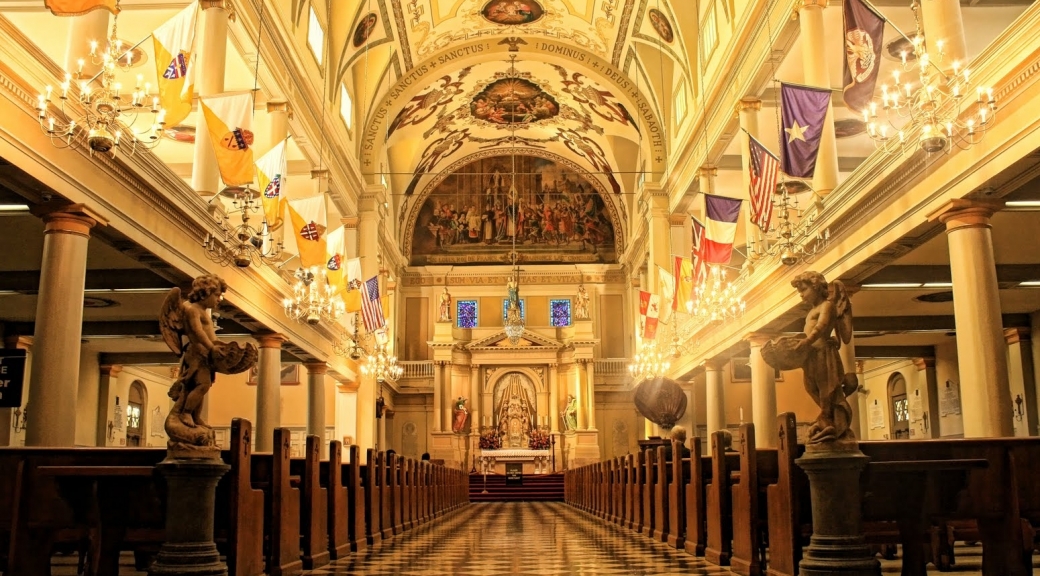
If the French Quarter marks the original layout of New Orleans, then the original inhabitants were the Creoles, people of French, Spanish, an eventually mixed French and Spanish descent. That phenomenon is eloquently realized when one considers the names of two of the main buildings on Jackson Square: the (Spanish-origin) Cabildo and (French origin) Presbytere. It is also worth noting that St Louis Cathedral, which dominates Jackson Square, is the oldest contiguously operating cathedral in the USA, and a fine example of French Colonial Architecture in its own right.
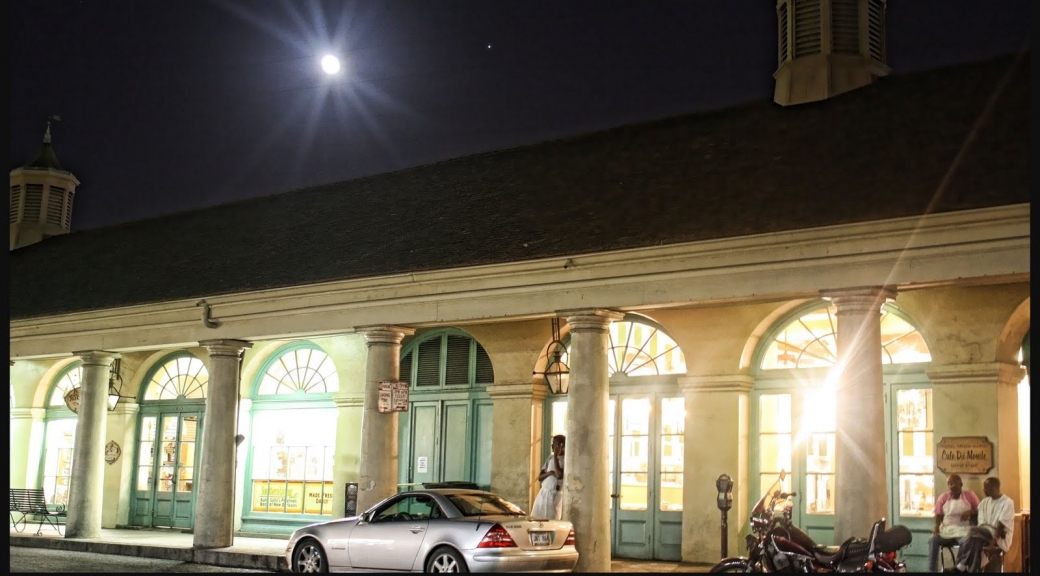
Although the Creoles called the French Quarter home for many decades, they began moving out as the area became more depressed and ramshackle, especially in the eary 20th-century. That was when city officials shut down the vice in the red light district of Storyville. In response, the purveyors of sin crossed Rampart Street into the Quarter, and the Creoles moved out, to be replaced by Italian immigrants (hence the presence of shopping arcades like the French Market) and later, bohemians attracted by the area’s undeniable architectural charms. In 1965 the Vieux Carre Historic District was established, allowing for the preservation of the Quarter’s historic character. The 1984 World’s Fair turned the Quarter into a bustling tourism destination, which is around the same time that many residents began leaving the neighborhood.
The Quarter tends to weather (no pun intended) hurricanes and storms pretty well. Power lines are built underground, the neighborhood itself was built on ‘high ground’ (a few feet of elevation, but that’s
enough) that keeps it immune from flooding. Today, while the Quarter is largely an area for tourists, thousands of residents do call it home.
Creole — ‘Creole’ is a word tossed around pretty carelessly in New Orleans (and Louisiana). We use the word to refer to people descended from the French and Spanish who made up the original population of
New Orleans. People of African descent born in Louisiana during the French and Spanish colonial period were also dubbed Creoles, and we use the word to refer to their descendants as well, many of whom
self-identify as Creole. For more information, see our section on the difference between Creole and Cajun.
II
Creole and Cajun — Are not the same thing! ‘Creole’ has multiple meanings, but we mainly use it to refer to the Franco-Spanish, and sometimes Franco-Spanish-African, cultural bedrock that New Orleans is built upon. Creole cuisine, architecture, music etc is an outgrowth of this cosmopolitan blend of nationalities. ‘Creole’, in the context of New Orleans, is a fundamentally urban phenomenon, although Creoles do live outside of the city and can be found all along the Gulf Coast, and up the Mississippi River all the way to Michigan. Note that slaves and free people of color born in Louisiana were also dubbed ‘Creoles’ to differentiate them from people of African descent born outside of the colony.
Cajun refers to the descendants of the Acadians, the French-speaking refugees from Nova Scotia who settled in Louisiana in the 1760s.The Acadians left Canada after the British conquered New France during the French & Indian War; when they refused to sign an oath of allegiance to Britain, they came to then-French controlled Louisiana, where they eventually became known as the Cajuns. There are Cajuns in New Orleans, but the Cajun heartland is centered around Lafayette, 150 miles west of New Orleans, and Cajun culture is fundamentally rural.
III